How Mold Can Affect Your New Home: The Dark Side of Winter Construction
Written by Sean Moss, Mold Inspector | December 16, 2025
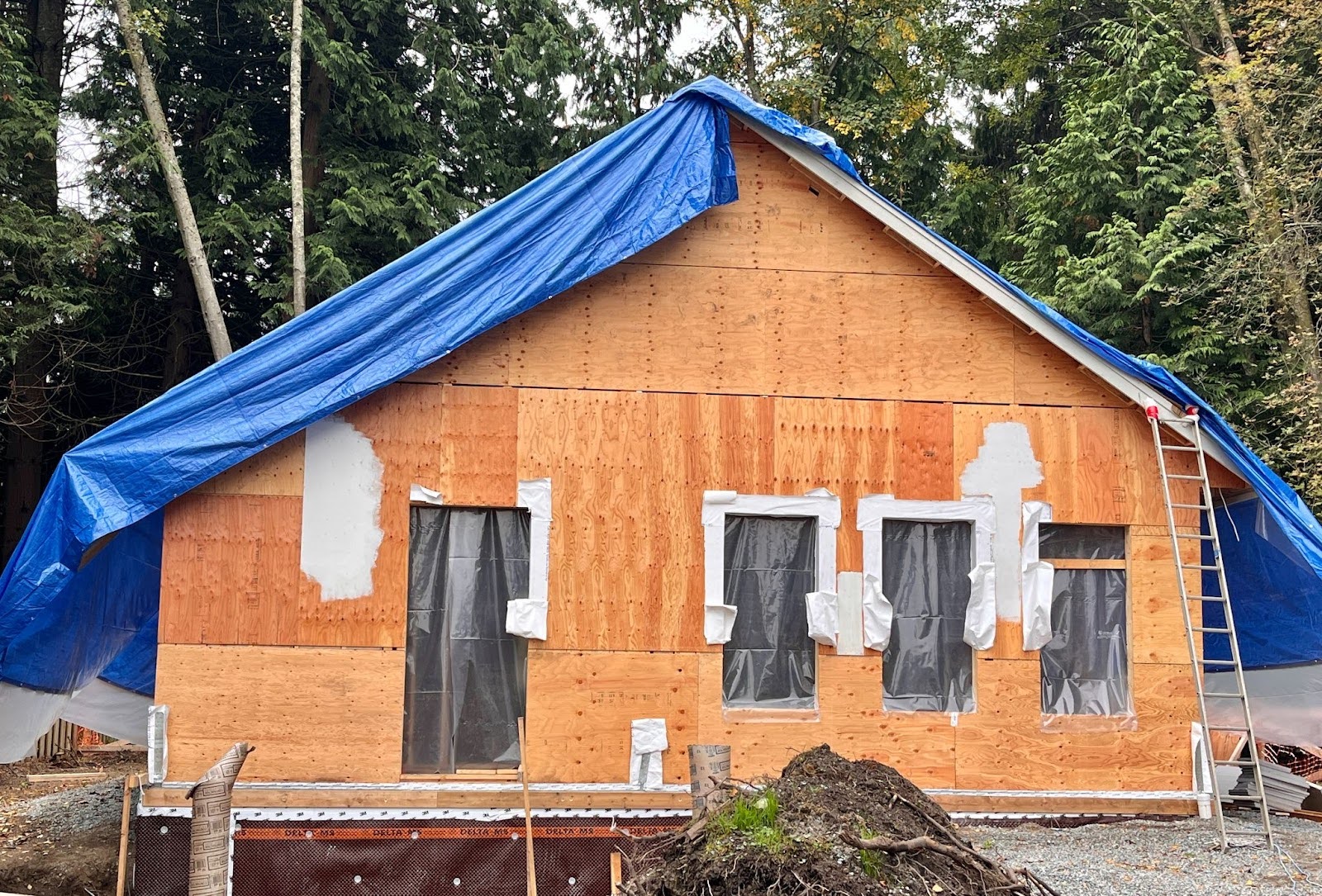
This article exposes the important questions you should consider if you are planning to buy, build or have recently purchased a newly built home during the rainy season.
Mold in our homes is becoming a frequent topic of discussion as we learn more about the damage that it causes, and the potential impact on our health.
Much of this conversation leads to the necessary remediation efforts to remove mold when it becomes problematic. The focus is typically reactive.
The next step usually involves figuring out ways to prevent the mold from coming back. I guess it is human nature to learn from our mistakes so we don’t make them again.
The more expensive or dangerous the mold issue is, the more we pay attention. Sad but true!
It would be extremely rare for people to ask me if their newly constructed home may end up with mold issues, resulting from the original construction.
Homebuyers do not seem to consider whether or not their new homes may actually be harboring mold.
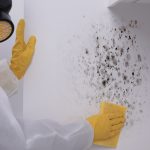
As you will discover below, I believe people (homebuyers and builders) should be thinking about this, especially since mold is often not discovered until the homeowner begins to notice health issues similar to mold exposure (allergy or flu like symptoms, itchy watery eyes, coughing, rashes, dry throat, etc) or they smell musty odours or they see it.
I also think that it might have something to do with our tendencies to be reactive, coupled by the fact that mold is still a mystery to most folks.
Why does mold affect so many new homes?
The sole reason mold exists is to break down dead organic materials in our outdoor environment. So essentially, mold is nature’s recycling program. If we didn’t have mold, we would be walking around waist deep in vegetation and debris. Yuck!
Mold is a type of fungus and their spores are everywhere, so getting rid of mold completely is impossible. Mold needs moisture, moderate temperatures and a food source (organic material) to live and thrive.
Aside from the moderate temperatures and food sources, the single most important ingredient for mold to grow is moisture. Remove the moisture and the mold will stop growing.
However, what many people don’t think about or know is that mold is remarkably resilient. It can dry out, and remain dormant for thousands of years, only to start growing again when the conditions are once again ideal.
Mold is also mysterious because unlike plants, which need sunlight to photosynthesize, mold cannot do that, so it must grow in dark areas, often hidden from sight.
That is why it can be discovered indoors behind walls, furniture, in crawlspaces, attics, behind shower walls, etc.
Unfortunately, mold does not know that we would all be much happier and healthier if it just stayed outside.
Mold is a problem for newly built winter homes
As a mold inspector, I have noticed an alarming truth. These new homes are getting infected by mold!
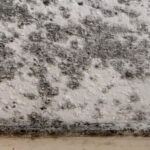
Just take a look at what happens to the crawlspace of a new home, when it has been built during the rainy season without adequate pre-construction and planning.
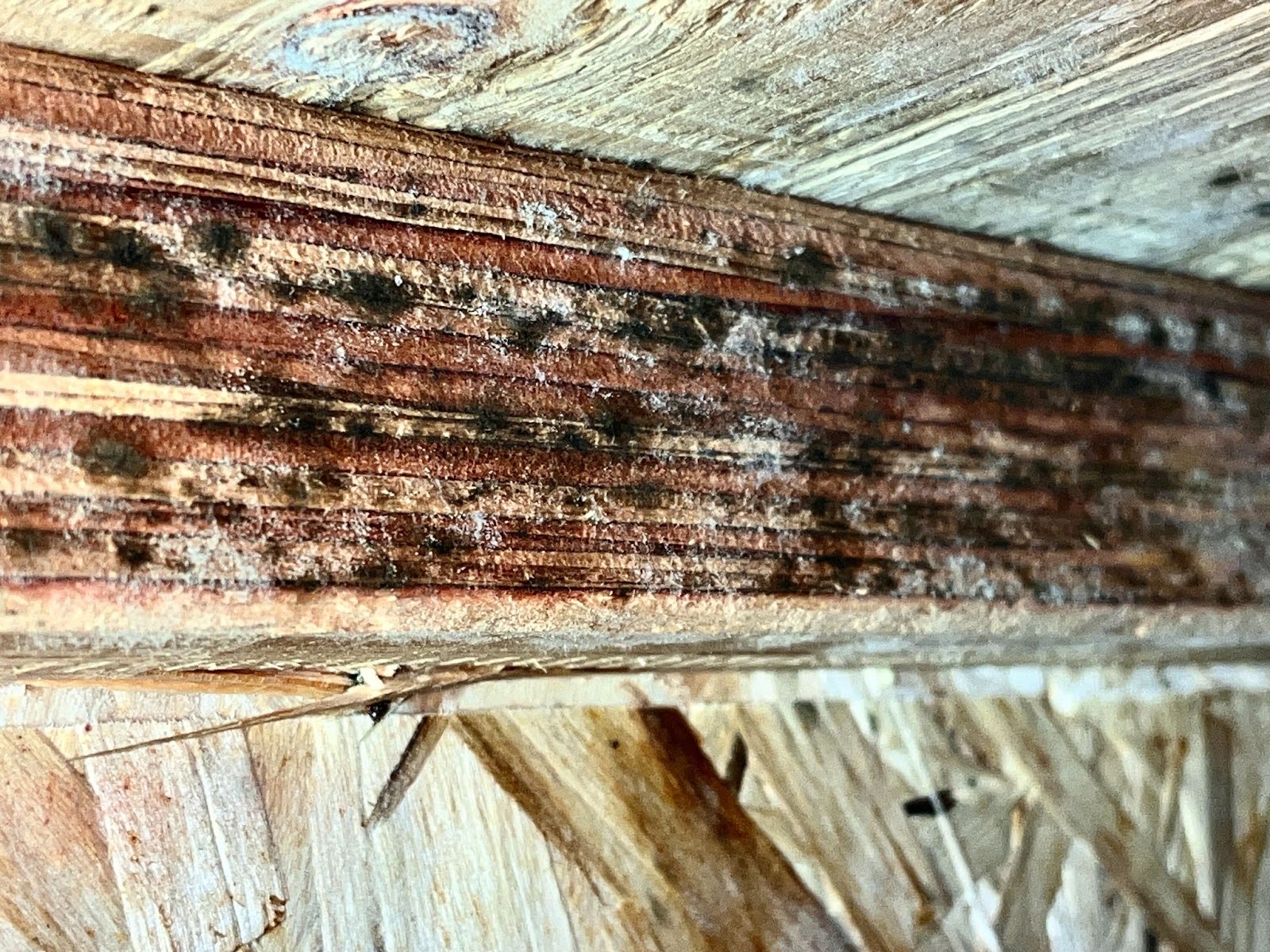
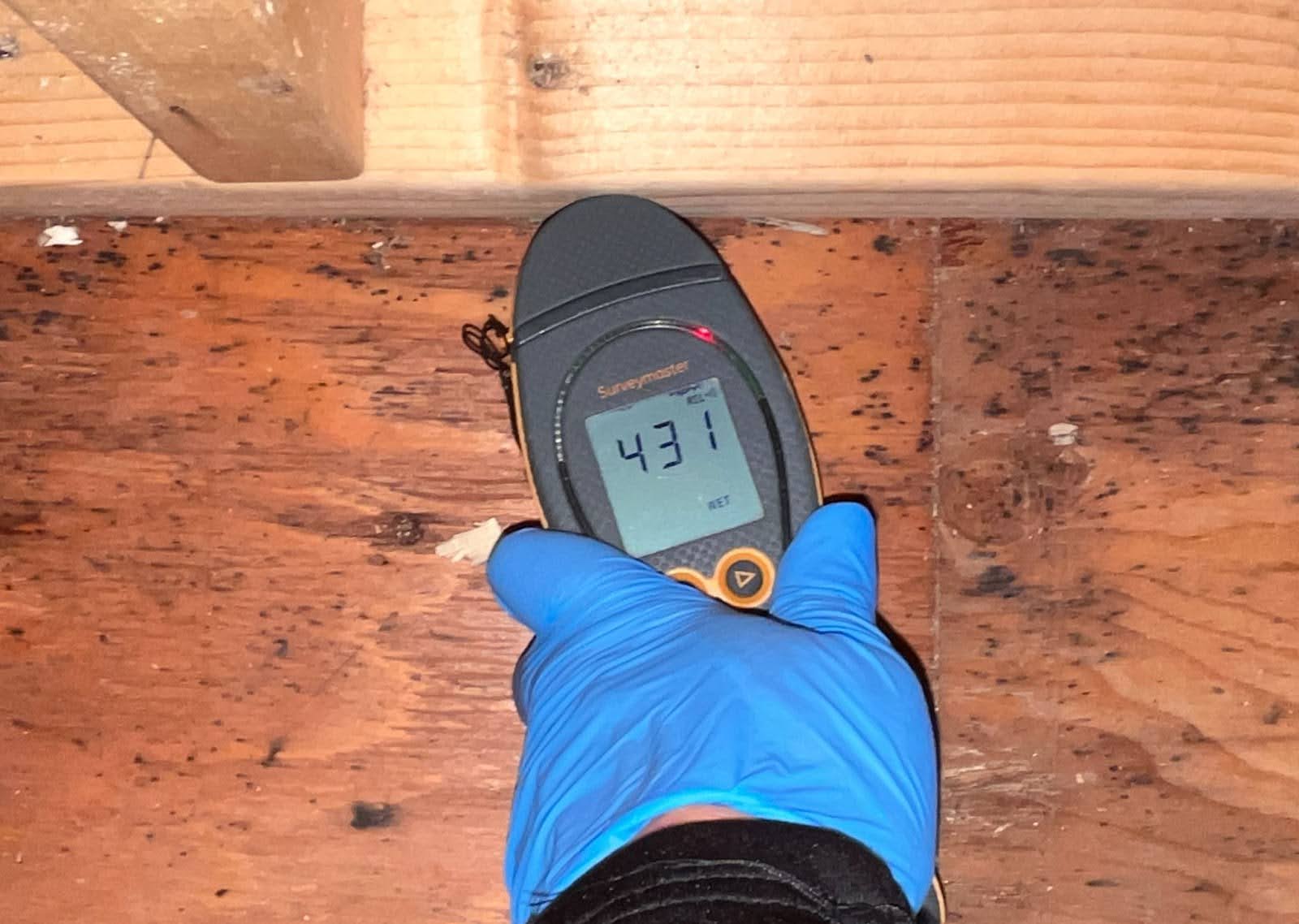
The pictures you see are first hand proof that mold is problematic and will continue if a proactive approach to mold prevention is not prioritized.
Here in the Pacific Northwest, or more specifically Vancouver (which I commonly refer to as “Raincouver”) we live in a rainforest. We get a lot of rain from October all the way through to May – more than 6 months of the year!
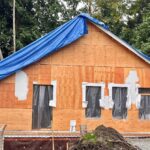
While driving through the city these past few months, I’ve witnessed several homes under construction and piles of wood that were completely saturated from the rain. Not only was the structure wet, the concrete foundation walls were soaked.
Considering these circumstances, I would suggest that winter is not the ideal time to build a home, especially here in Vancouver or Seattle, etc.
What is the answer to preventing mold inside newly built homes?
In reality, we have to rely on the supplier to send dry materials to the site.
Next, the builder must ensure that the construction materials stay dry or below 19% moisture content before they can be used.
After all, once the building has been finished (covered by drywall and insulated) there is no way for us to see what is actually going on behind the walls.
In addition, houses are going up quickly these days, as there is a lot of money on the line when projects are delayed.
As a result, some builders may in fact be pressured to complete the houses in short order, without taking the necessary steps to keep the floors and structure dry.
Damp wood and OSB (Oriented Strand Board) , a durable, engineered wood product can become infected by mold within 48 hours.
Construction during the winter poses some unique challenges for builders as they work through wet, cold conditions.
We have to change the way we think about dealing with mold, by being proactive, rather than reactive.
This involves understanding the procedures that a builder needs to take in order to protect the framing and construction materials from moisture, throughout the entire building process.
This can be accomplished through the following:
- Frequent moisture testing
- Setting up containment areas and installing tarps to protect the building materials
- The use of drying & heating equipment
These measures can reduce the risk of hidden mold following construction.
However, if mold related issues become apparent soon after construction, complications may arise with respect to resolving these issues. We have already seen this.
Taking the necessary precautions to keep the home dry will likely be an expensive undertaking. However, it is a worthwhile investment both at the building stage and long after.
If you do plan to have a home built in the winter, consider the following:
- What steps are builders required to take to ensure that a building stays dry during construction?
- Who is enforcing these rules?
- Do the Homeowner warranty programs cover water damage or mold damage in new homes?
- Are insurance policies available for mold? If so, what do they include?
At the end of the day I believe that much consideration should be given to this topic.
Builders need to set in motion a proactive plan for reducing the likelihood of wet, mold infected homes.
In addition, homebuyers must be aware of the potential possibility and implications that mold can have on new homes, their risk to health and the necessary financial investment pre, during and post winter construction.
© 2025 Mold Insight. All Rights Reserved.