Household Mold: Where to Find Mold in Your Home
Written by Sean Moss, Mold Inspector | October 2, 2023
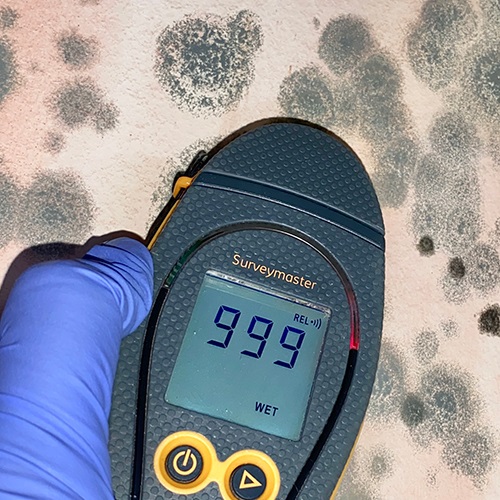
Mold can and will grow indoors when the conditions are ideal, and the most important ingredient is moisture. Mold can begin to grow within 24-48 hours. If you manage to get rid of the moisture, then mold will not grow.
However, it doesn’t mean that mold will not be there. Actually, mold spores can lay dormant for months or years until the right temperature, moisture and nutrients are available.
Cellulose materials in the home, like paper, cardboard, wood, ceiling tiles and drywall are the perfect food sources for mold. Any non-porous, organic materials such as leather goods and particle board backing will support mold growth as well.
As a matter of fact, mold will grow on anything organic where nutrients are abundant, such as dirt, dust and debris.
Preventing mold spores from entering your home is impossible. We will always have mold in our homes. Since we can’t get rid of mold completely, the key is to control it in the home. Knowing where it can be is a good start, but ongoing preventative maintenance will help you keep it under control.
Bathroom Mold
Bathroom mold tops the list when it comes to household mold problems.
This makes sense because there are so many areas in the bathroom that can cause mold.
Mold is commonly found under the toilet tank, on the ceiling, along lower walls, baseboards and under the bathroom vanity. Bathroom mold can also show up just below the surface of the floor along the shower and tub.
However, the most concerning and problematic area originates in the shower. When maintenance has been neglected or prolonged, then you will see mold forming along the corners, and in between the grout lines. Any cracks or voids along the shower walls (lower ones especially) will facilitate mold growth behind the tiles. Even when there are no voids, the grout lines will allow moisture in behind the tiles as the mortar is porous.
When left unchecked, the condition will lead to mold and excess moisture behind the tiles. This happens because the moisture becomes trapped behind the wall. People usually will not know this unless they begin to smell mold, start renovations, the tiles become loose, or they find out from a mold inspector.
Kitchen Mold
In addition to bathroom mold, I receive a lot of calls from clients complaining about mold in the kitchen.
Kitchen mold will often be found under the sink, on the base of the cupboard, or along the underside of the counter. Small pipe leaks, loose connections, or seepage from the perimeter of the sink are usually the main causes.
Kitchen floors in front of the sink, by the dishwasher and behind the refrigerator are common culprits, as well. If you notice a musty smell, take a look in the areas mentioned above for any surface mold. Take care of any issues promptly.
Laundry Room & Closet Mold
Often difficult to see—yet abundantly apparent through its distinct odour—is mold in the laundry room/closet.
Any spills or leaks on the back wall or below the appliances will contribute to mold growth.
Typical causes include leaky pipes, ruptures in the hose connections (rubber), and broken laundry ducts.
If you see mold on the walls and ceilings it is usually from indoor humidity caused by drying the clothing inside, rather than using the dryer.
Attic & Crawlspace Mold
Mold often grows in the attic and crawlspace. These areas are unconditioned (cooler and unheated) which allows the mold to accumulate and thrive.
Attic mold can be caused by a number of factors:
- Ventilation issues, including inadequate or blocked ventilation, or damaged vent ducts from the laundry and/or bathroom.
- Condensation on the attic sheathing, especially during the winter when the sheathing cools down, making it wet and supporting mold growth.
- Roof leaks, especially when moisture seeps below the insulation.
- Seepage of moist, warm air into the attic.
Sources of crawlspace mold typically include:
- Moisture seepage from below the ground, often due to a missing or torn/damaged vapour barrier.
- Moisture seepage through cracks in the foundation wall.
- Vented crawl spaces.
Conventional thinking was to vent the crawl space, but we have learned that this actually causes moisture to be drawn into the crawl space, allowing condensation to form on the sheathing and joists.
It is a good idea to have your attic and crawlspace inspected annually to catch any ventilation, mold or moisture problems quickly before they become problematic.
Basement Mold
Basement mold is also common, especially in older homes which often are poorly sloped and do not have proper waterproof membranes around the perimeter of the home.
Cracks and corrosion along the foundation wall will easily facilitate moisture ingress.
In addition, outdated drain tile piping, such as clay or concrete will shift or breakdown overtime, causing backups and or flooding, which leads to seepage into the home.
Basement suites are typically cool, with limited air flow. Mold loves a cooler environment because it allows for easy growth. So naturally, keeping the basement warm and dry is best.
Similarly, the best way to protect your paper based personal items—such as documents, books and photos—is to keep them dry and warm. Store them in a part of the home that is not conducive to temperature fluctuations or cooler areas. For best results, store them in hard plastic, sealed containers.
Also, avoid storing your cardboard boxes, or any other items directly against the foundation wall, as the limited air flow and moisture will cause mold to grow.
Basement Carpets
Mold can and will easily grow under the carpet for a few reasons. There is typically an abundance of organic debris and dirt inside the base of the carpet, which is a great food source for mold.
Carpets easily absorb moisture and keep it there until it eventually dries. When the drying process exceeds 24-48 hours, which is common, mold will grow. Even when the mold stops growing in the carpet, it will remain dormant.
Typically, you will see mold patches under the carpet. It is not feasible to try and clean a carpet that has been infected with mold, because mold has a robust root system that is very difficult to remove, so you will have to toss it out.
It is best not to install carpets in basements, especially in older homes.
Window Mold
Mold is commonly found on the window sills and window frames. Older, single pane, metal window frames will generate the most moisture, especially during the winter.
When the metal window frame cools down, condensation forms. Any dust, dirt or debris will be the available food source for the mold.
Even double-pane, vinyl, or fibreglass windows will get moldy.
This is usually caused by a combination of high indoor humidity, organic material (as mentioned above), and the fact that windows are the coldest areas of the home, allowing minor condensation to form and accumulate.
This can be dealt with and prevented by keeping the area warm, clean, and dry at all times.
Closets, Bedroom Corners, & Wall Mold
Closets, bedroom corners, and walls will support mold growth. Mold is commonly found along exterior walls in closets.
Exterior walls are always cooler than interior walls. Uninsulated walls are worse. When there is limited airflow (no ventilation) and of course the accumulation of dust or dirt, expect to find mold.
Similar areas where ventilation does not exist or where cleaning can be difficult include behind furniture, curtains, and upper ceiling/wall corners. Mold on the surface of these areas is usually due to high humidity.
Resolving indoor humidity issues is a huge step to preventing indoor mold, so it is critical to use the bathroom & kitchen fans, keep laundry in the dryer rather than drying your clothing indoors, and using a dehumidifier if you experience excess humidity.
Garage Mold
The garage is a common place to find mold as well. In fact, the conditions in garages are ideal for mold growth. They are cool, not completely sealed, and easily attract dirt and moisture.
During the winter, the vehicles that enter the garage carry excess water and/or snow. When the water is evaporating, the garage becomes humid. In addition, the cooler the garage, the longer it takes to dry, which increases the chances for mold growth.
Garages also get dusty and dirty very easily. By now, we know that the dirt and debris in the garage will support mold growth as a food source.
On a mechanical garage door, ceiling, and exposed drywall, we can easily notice the mold and deal with it quickly. However, when excess storage has been stacked up against the walls and corners, the mold is often hidden and will grow undisturbed.
If you plan on storing items in your garage, it makes the most sense to buy a stackable storage system. Keep the shelving at least a few inches from the walls and floors. You need the space to prevent any moisture on the walls from getting your storage items wet. I recommend storing all of your paper documents and photos inside a dry area of the home, inside sealed plastic containers.
It’s also not a bad idea to keep the garage dry and warm if possible. Many newer homes have electric baseboard heaters installed within the garage, especially if they are attached to the home. Older homes and detached garages may not have a heat source, so mold growth is more likely to occur.
Remember, the most important part of managing the mold in your home is to identify and rectify the moisture source(s) as soon as possible.